First Things First/> Introductions: From the handwritten “A journey through the eye” by Eileen Agar to “Octopus Optics” by Stephanie Cussans Moran, PhD
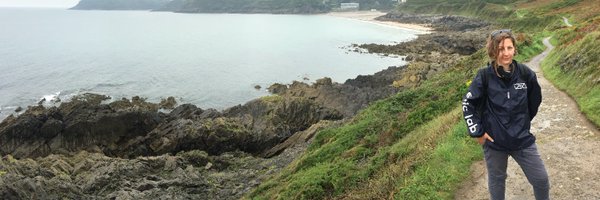
My work with Etic Lab, collaborating with data scientists, Machine Learning developers and cognitive scientists was key to developing my understanding of AI and cognitive zoology. In particular the project we worked on with artist collective 0rphan Drift, who had been exploring octopus cognition and wanted to build an octopus AI.
To me Stephanie resembles Eileen Agar in so many ways… not only because they are both common creative thinkers but mainly because as creatives, through their work, they both celebrate life and all life forms….to quote Eileen “not only a single one, but life in general on this particular and moving planet’.
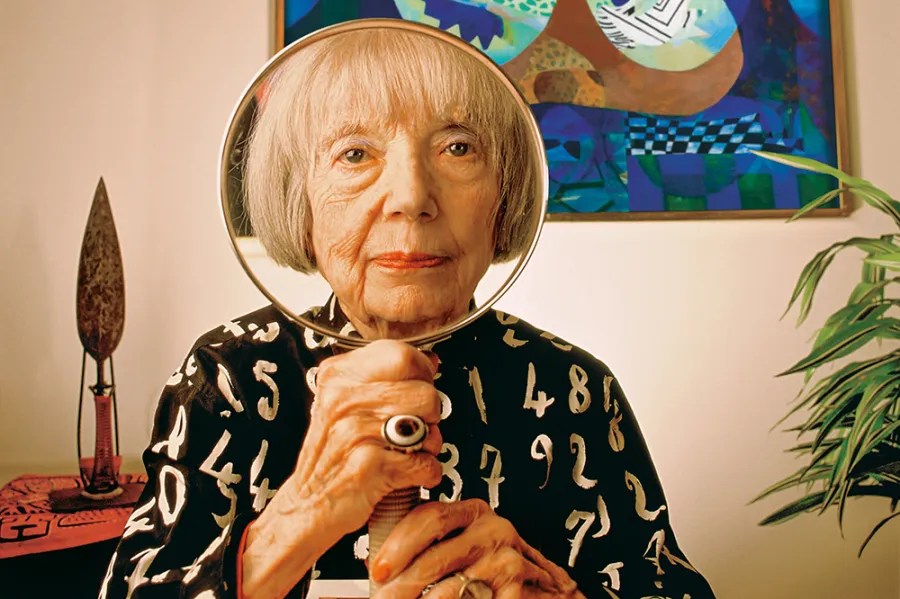
When reading Stephanie’s PhD thesis titled “OCTOPUS OPTICS: A CROSS-DISCIPLINARY INVESTIGATION OF HUMAN VISUAL BIAS IN NARRATIVE WITH CORRESPONDING WRITING EXPERIMENTS USING ANIMAL FOCALISATION” I thought about Eileen’s fascination with science to which I was guided by my friend Soc- a chemical engineer by trade, a fierce windsurfer and an artist at his core-whose unique insight and brilliant mind I absolutely adore, noticed that in one of her self-portrait photographs, Eileen is wearing a sweater with numbers. He then told me that “an artist would never wear numbers by chance…math means something to her”.
His intuition led me to search Eileen’s relationship to the sciences and came across the articles written by Christy Heflin.
“My mother came to visit
she was called the mitochondrion“
“A journey through the eye”
Up until that moment, I thought that her only association to science, and in specific to developmental biology, was the “Autobiography of an Embryo” but there was more to discover… In her handwritten short story titled: “A journey through the eye” she challenges – with a strong dose of humor – the anthropocentric scientific view of “creation” and -in my view-humanity’s existential agony through a narrative that shifts the focus from humans to tadpoles!
….and I think the choice of a tadpole was not in vain as the shape of a tadpole resembles sperm…
To my astonishment and perhaps naive interpretation (apologies to the Philosophy aficionados and scholars) both Eileen and Stephanie revisit the Protagorian anthropocentric perception of the Objective Truth that explains life and everything on this moving planet that warrants “man the measure of all things” (Protagoras of Abdera (l.c. 485-415 BCE) is most famous for his claim that “Of all things the measure is Man, of the things that are, that they are, and of the things that are not, that they are not” (DK 80B1) usually rendered simply as “Man is the Measure of All Things”.) To me it is clear that Agar and Stephanie are playfully critiquing the idea that humanity is the central reference for understanding life and its creation.
Another fascinating commonality is that they both draw their inspiration from the aquatic kingdom but I will leave this part to the reader to explore ….
Their visionary artwork serves as a reminder that the pursuit of knowledge knows no boundaries, transcending the confines of disciplines and eras, ultimately enriching our collective understanding of the world around us.
The following is a conversation with Stephanie whose path has been shaped by a relentless curiosity and a passion for blending art, science, AI and philosophy…
iscri\ design an AI model that could communicate with an octopus
How did you end up pursuing art, and what has your path been?
I discovered modern art because I’d read all the children’s fiction in my local library and moved on to the next most interesting thing, the art books (this makes me sound precocious, but I wasn’t allowed to watch TV so the library was my main source of entertainment, along with making costumes out of second hand clothes with my sisters and dressing up as different characters to make our own imaginary ‘TV’ entertainment – something that I revisit later in my paintings). I read about Picasso and I learned that art could be about ideas. Then I was introduced to contemporary art when the Tate opened in Liverpool, where I grew up. I went on a school trip and learned about abstraction, that abstract art could also express complicated ideas. I started visiting art galleries on my own after this, from when I was quite young, 11 or 12 (also thanks to the lack of TV).
I was drawn to study art at university because I liked the idea of pursuing lots of ideas; the freedom of thought, the freedom to roam across disciplines and not be constrained to one subject. This seems a little naive looking back. But at the same time, I was cross-disciplinary from the beginning although I would never have put it in those terms then. I was interested in literature and literary theory, philosophy, cultural history, anthropology, even if I didn’t know what they all were at the time.
After a BA at Manchester and a postgraduate diploma in Cyprus (at a tiny international art school, Cyprus College of Art, set up by Stass Paraskos who had taught for years in England and then wanted to create a school in his own country for painters and sculptors from all round the world, without all the bureaucracy of UK universities), I moved to London and started working as a gallery attendant in major galleries including the Tate.
I met lots of other young artists in the same position. I got a studio with friends, and spent all my spare time painting or going to exhibition openings. I became part of a community of artists. I was a huge fan of Paula Rego’s work, and Angela Carter’s writing, both of which have strong elements of gothic magical realism and feminism, questioning gender roles and constructs, drawing on myth and fairytale. I was trying to find my own path through that kind of subject matter and aesthetic area, creating my own characters and narratives. I was very interested in goddesses – as I wrote in the first ISCRI story, I actually had found and read books about possible matriarchal prehistories (which I now know as feminist archaeomythology) called things like ‘When God was a Woman’ while on my BA, and I wanted to invent my own goddesses. I made large-ish figurative paintings, many of them based on collages. I made a lot of paintings, for years; I made a lot of bad paintings and eventually made better ones. I organised and participated in lots of exhibitions with friends, and became interested in exploring group dynamics and ideal communities, still with feminist narratives and goddess figures.
I did an MFA quite late on, at Goldsmiths in London [2011-13]. I experimented a lot during that time, devising performances and rituals, exploring ideas about groups and communities – structures, dynamics, the ‘temporary autonomous zones’ of festivals and riots. This is where animal groups started to creep in more too, in my paintings of packs of wolves and research about wolf pack dynamics.
For my MFA thesis, I interviewed the directors, leaders or members of 7 organisations that had been set up around some kind of idealistic vision – including Cyprus College of Art; a long-running secular community called Braziers Park School of Integrative Social Research; an anarchist cooperative in Amsterdam; and an activist artist community in France.
It was these thesis interviews, and my subsequent involvement with Braziers Park in particular, that really led me to the ecological work and my PhD project. Along with an interest in groups of other animals. While visiting the Braziers Park community, who had been experimenting with permaculture and other forms of eco farming, I met and became involved with a wider network of ecologists and ended up art editing their online journal, The Ecological Citizen.
After reading a book by philosopher of science Donna Haraway called ‘Staying with the Trouble, and especially the ‘Camille’ stories in the last chapter, I began to be interested in the sensory worlds of other animals – how trying to imagine other animals’ different lifeworlds might both help to shift human-centred perspectives and narratives and to better respect the agency of other animals that is made invisible when we test and represent them in relation to human sensory worlds. Although we might inhabit the same spaces, we experience and live in and move through them in different ways.
What drew you to exploring concepts that blend biology, ecological psychology, art, anthropology, and AI?
My work with Etic Lab, collaborating with data scientists, Machine Learning developers and cognitive scientists was key to developing my understanding of AI and cognitive zoology. In particular the project we worked on with artist collective 0rphan Drift, who had been exploring octopus cognition and wanted to build an octopus AI. My PhD with Transtechnology Research was explicitly transdisciplinary and so it enabled me – gave me the support and confidence, helped me create a framework – to explore the question of other animals’ sensory worlds, or Umwelten (in biologist von Uexkull’s terminology), through new disciplines. Collaboration with experts in their field is a key to cross-disciplinary research. And I think artists are generally well-equipped to synthesise knowledge across fields, to creatively develop synthetic methologogies and to investigate new ideas in the form of cultural artefacts.
I began with zoology, which seemed the obvious place to start learning about other animals’ sensory worlds. The fellowship I did at the Smithsonian’s Museum of Natural History, working with freshwater mussel experts John Pfeiffer and Sean Keogh, was important for developing a better understanding of the natural history context and interpreting scientific papers. Mussels, like octopuses, belong to the mollusc family. Although they are quite distant relatives, it is illuminating to learn about their morphological and cognitive overlaps and divergences.
Zoologists and philosophers of science such as Frans de Waal, Jennifer Mather and Eva Meijer talk about human visual biases in zoological experiments to test other animals’ cognition; they show that many of these in fact only test other animals for human cognition, based on the human sensory aparatus.
Ecological psychology was what helped me find a path through that and to create a bridge between zoology, other animals’ cognition, and art and literature. J.J. Gibson’s work on visual perception was intended to apply across humans and other animals; he understood visual cognition as part of interconnected sensory systems that have evolved through different ways of life in environments. This is a good fit with natural history ways of thinking. He was also very interested in visual perception in art, contributing to the famous art and science journal Leonardo, and corresponding [arguing] with the art historian Ernst Gombrich, the author most famously of ‘The Story of Art’ (a story that neglected to include any women). His ecological psychology was premised on cognition always being relational (between animals and environments) and perspectival; we might not be able to get inside other animals minds – and in fact, for Gibson (and for me), there is no ‘inside’ only a ‘between’ – but we can gain a better understanding of their cognition if we understand their point of view, their ways of living in and moving through their environments; whether crawling along the ground, swinging through the trees, sitting on the river bed or walking upright. He critiqued western painting’s un-ecological detachment of the eye from the body and other senses (there is a rather longer argument, you can read more about it here). For my purposes here, suffice it to say that his work helped me to rethink point of view in images and what literary theorists call focalisation in narrative; and from that, to also rethink visual metaphors in narrative and painting. Sensory anthropology and literary theory – especially cognitive narratology – also helped me to apply the zoological-ecological to analysing cultural artefacts.
What inspired you to explore these concepts, to challenge the anthropocentric perception and narration of human culture and history, by narrating it through an octopus anthropologist [in your thesis]?
Haha, I was very much inspired by science fiction, which often deals with social issues from an outsider perspective, through the distancing lens of far future or alien cultures. Some of the SF books that were influential were Adrian Tchaikovsky’s ‘Children of Time’ and ‘Children of Ruin’, which really try to imagine the sensory perceptions of spiders and octopuses; the amazing cyberpunk writer Pat Cadigan’s short story, ‘The Girl-Thing Who Went Out for Sushi’, about workers in outer space who transition to cephalopods [octopuses, squid, cuttlefish, nautiluses] because they are better forms for working in high pressure, low gravity environments; and Vonda N McIntyre’s Starfarers series, especially the alien squidmoth in ‘Metaphase’ and ‘Nautilus’. Both Cadigan and McIntyre make analogies between outer space and deep-sea environments. I was also inspired by a controversial book by sociologists of science Bruno Latour and Steve Woolgar, called ‘Laboratory Life’. Latour and Woolgar wrote about their time as sociologists in residence in a science lab from an alien perspective, as if they were anthropologists writing about the strange practices and rituals of an entirely unknown culture (it’s hilariously funny).
What are the challenges and future directions of your work?
Well, I really want to further explore ways of representing natural and cultural histories. Since my PhD, I’ve been making paintings again, initially about the imagined sensory lifeworlds of freshwater mussels, which are very important to freshwater ecosystems – they’re a keystone species, many of which are endangered globally. I’m thinking about resonances between cultural and ecological histories in specific places, and am very interested in the unique ecology of Crete and its uniquely preserved ancient cultural artefacts, which I explored very speculatively in the story below. I’d like to develop these ideas and create new bodies of work that can also inspire non-scientists to care about the often unseen other animals in their environments, many of which are endangered but are critical for ecosystem health.
I’ve just started a Postdoctoral Fellowship at Brno University of Technology, in the painting studio of the Fine Art Faculty, where I am researching solar motifs, metaphors and rituals in the Bronze Age artefacts of Crete. I’m making a transhistorical and transgeographic comparison with the 19th century Impressionist painters, who were fascinated with optics, with how we see, and developing new techniques for representing the effects of sunlight in natural environments.
The research questions it begins with are:
How might a synthesis of recent ideas about Minoan ritual ecological practices and embodied cognition research with Impressionist optics, expressed through painting, contribute to the posthuman ecological project of challenging anthropocentric perception?
What new insights might Impressionist painting practices representing the effects of sunlight generate for understanding ecological solar rituals, metaphors and symbolism in Minoan culture?
I’d like to use this five-month post-doc to start building a new project, ideally about the natural and cultural histories of Crete. The last two sections of the story below fictionally imagine what this project could be, a kind of fantasy proposal. But the challenge now is to build a real project, a new cross-disciplinary collaboration. I’m working on finding the right partners and funding for this kind of speculative research, that would enable working with research zoologists to develop the ideas and artworks but also with technologists to create new ways for audiences to interact with them.
I think, more generally, I was very encouraged by participating in the recent European Congress of Malacological Societies in Crete, Greece. I was very nervous about presenting my work to a roomful of mollusc experts! But they were very interested and supportive, and I’ve had a number of follow-on conversations; they could see how this kind of project can be in dialogue with their research and help to support their conservation efforts. So I am hopeful that there is a future for developing these ideas further, in collaboration across disciplines. And I think people can see how important this is, in light of climate changes and biodiversity loss.
 z(AI)gote